Why Digital Nomads Nairobi Is an Emerging Hub
Nairobi doesn’t show up on most “top digital nomad destinations” lists yet — and honestly, that’s part of the appeal. While Bali and Lisbon are overrun with laptop warriors fighting for café seats, Nairobi offers something increasingly rare: genuine value, solid infrastructure, and a city that hasn’t been reshaped by the nomad economy.
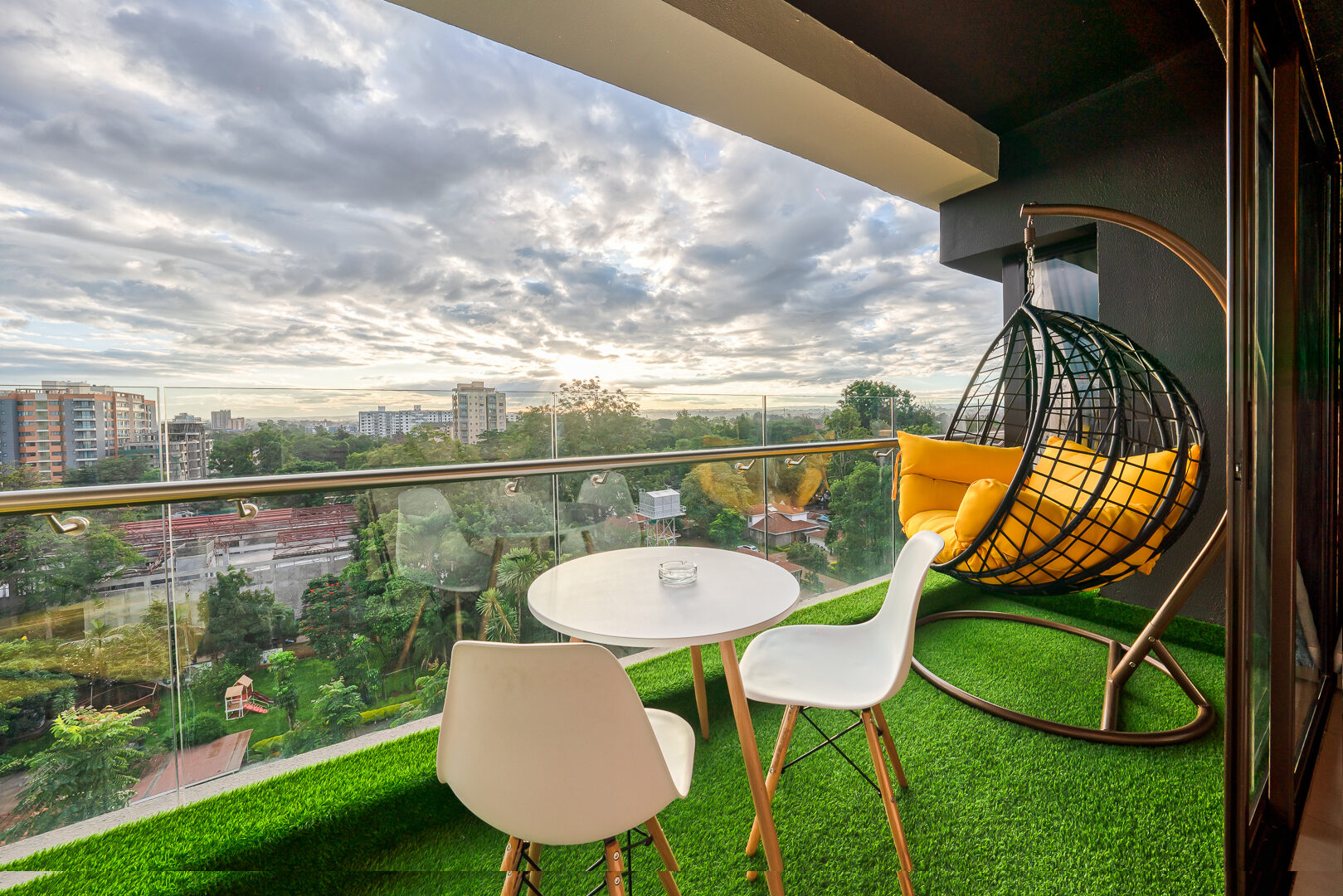
We operate 12 short-term rental apartments in Nairobi, and we’ve watched the digital nomads Nairobi community grow steadily over the past three years. Remote workers from Europe, North America, and increasingly from other African countries are discovering what expats here have known for years — Nairobi works.
Here’s the unfiltered guide to making it work for you.
Digital Nomads Nairobi: Monthly Rental Pricing: What to Budget
Furnished apartments are the standard for nomads in Nairobi. Unlike some cities where you’re stuck with Airbnb nightly rates, Nairobi has a robust monthly rental market:
Price Ranges by Neighborhood (2026)
- Kilimani — 1BR: $800-1,200/month | 2BR: $1,000-1,600/month
- Westlands — 1BR: $900-1,400/month | 2BR: $1,200-1,800/month
- Kileleshwa — 1BR: $700-1,100/month | 2BR: $900-1,400/month
- Lavington — 1BR: $800-1,200/month | 2BR: $1,100-1,600/month
- South B/South C — 1BR: $400-700/month | 2BR: $600-1,000/month
The digital nomads nairobi community has grown significantly since 2022.

These include furnishing, WiFi, water, and often a cleaning service. Electricity is usually separate (budget KES 3,000-5,000/month, about $20-35).
For full pricing data across all neighborhoods, see our complete Airbnb pricing guide for Nairobi.
How to find monthly rentals:
- Airbnb monthly stays — Filter for 28+ night stays. Many hosts offer 20-40% monthly discounts.
- Booking.com — Extended stay options available for some properties.
- Facebook groups — “Furnished Apartments Nairobi” and “Expats in Nairobi” have daily postings.
- Property managers — Companies like ours (Elite Stays) offer direct monthly rates that beat platform pricing since there are no booking fees.
Digital nomads nairobi tip: get a Safaricom SIM for mobile data backup.
Digital Nomads Nairobi: WiFi & Internet: The Make-or-Break Factor
Good news: Nairobi’s internet infrastructure is genuinely strong. Kenya was one of the first African countries to get undersea fiber cables (SEACOM and TEAMS landed in 2009), and the domestic fiber network has expanded massively since.
What to Expect in Your Apartment
- Safaricom Home Fibre — The dominant ISP. Plans from 10 Mbps to 100 Mbps. Most quality apartments have 40-100 Mbps connections.
- Zuku/Faiba — Alternative fiber providers. Also reliable in urban areas.
- Real-world speeds — In our apartments, we consistently see 30-60 Mbps download on speed tests. Enough for video calls, streaming, and heavy uploads.
- Reliability — Fiber is 90-95% reliable. Outages happen (maybe 2-3 times per month) but typically resolve within an hour.
- 4G/5G backup — Safaricom’s mobile network is excellent. A backup MiFi or phone hotspot gives you 15-30 Mbps as a failover. Absolutely essential for nomads.
For digital nomads nairobi offers an unusually low cost of living versus other hubs.
Internet Reliability Tips for Remote Workers
- Always have a backup — A Safaricom SIM with a data bundle is non-negotiable. 30GB costs about KES 3,000 ($20).
- Test before committing — Ask hosts for speed test screenshots. Run your own test within 24 hours of checking in.
- Choose fiber over mobile-only — Some budget listings rely on 4G routers instead of fiber. These work but are less reliable for sustained video calls.
- Dual-ISP apartments exist — Some premium properties have two separate ISPs for redundancy. Worth asking about.
- Power backup matters — WiFi goes down when power goes out. Apartments with generator backup keep you online during the occasional power cuts.
Digital nomads nairobi newcomers should budget $1,200–$2,000/month for a comfortable setup.
Pro tip: Buy a Safaricom SIM at the airport (or any Safaricom shop). Get a data bundle — 30GB for around KES 3,000 ($20). This is your backup internet and your connection for M-Pesa, Uber, and everything else.
Coworking Spaces in Nairobi
Nairobi’s coworking scene is one of the most developed in Africa, driven by the city’s tech startup ecosystem.
Nairobi Garage
Locations: Westlands (Pinetree Plaza) and Kilimani (Delta Corner)
Cost: Day pass ~KES 2,000 ($15) | Monthly hot desk ~KES 18,000 ($130) | Dedicated desk ~KES 25,000 ($180)
Vibe: Professional, established. Good mix of startups, freelancers, and corporate remote workers. Meeting rooms available. Fast, reliable WiFi. The best all-around option.
Website: nairobigarage.com
iHub
Location: Kilimani (Senteu Plaza)
Cost: Day pass ~KES 1,500 ($11) | Monthly from KES 12,000 ($85)
Vibe: Tech-focused. Nairobi’s original innovation hub. Great for networking in the tech ecosystem. Regular events and meetups.
Workify
Locations: Multiple across Nairobi
Cost: Day pass from KES 1,000 ($7) | Monthly from KES 8,000 ($55)
Vibe: Budget-friendly, no-frills. Good for focused individual work.
The Alchemist (Westlands)
Not a traditional coworking space, but this popular open-air venue has become an unofficial remote work hub during weekday daytime hours. Good WiFi, great food, creative atmosphere. More café-working than coworking.
Ikigai (Westlands)
Cost: Day pass from KES 1,500 ($11) | Monthly from KES 15,000 ($110)
Vibe: Wellness-focused coworking. Yoga classes, meditation rooms, healthy food options. Appeals to the lifestyle-focused nomad.
Best Cafés to Work From
Sometimes you just want a good coffee and a change of scenery. These cafés are nomad-tested:
- Artcaffé (Westlands, Yaya Centre, Junction) — Reliable WiFi, comfortable seating, good coffee. The unofficial remote work café of Nairobi. Power outlets at most tables.
- Java House (Multiple locations) — Kenya’s original café chain. Consistent WiFi, ample seating. The Westlands and Adams Arcade locations are best for work.
- Connect Coffee (Kilimani) — Specialty coffee, good WiFi, quiet atmosphere. A nomad favorite.
- Brew Bistro (Westlands) — Better for afternoon work sessions. Rooftop setting, fast internet, craft coffee by day, craft beer by evening.
- Café Deli (Karen) — If you’re based in Karen, this is your work café. Garden setting, good food, reliable WiFi.
The digital nomads nairobi scene includes regular meetups and coworking events.
Detailed Cost of Living Breakdown (2026)
Here’s a realistic monthly budget for a digital nomad in Nairobi:
Comfortable Mid-Range Budget
- Rent (1BR furnished, Kilimani): $1,000
- Electricity: $25
- Internet (included in rent + SIM data): $20
- Food (mix of cooking and eating out): $350-500
- Transport (Uber/Bolt): $100-150
- Coworking (optional, 2-3x/week): $60-100
- Entertainment/social: $150-250
- Gym (good gyms available): $40-60
- Miscellaneous: $100
What makes digital nomads nairobi different from Bali is the genuine value.
Total: $1,850-2,200/month for a comfortable lifestyle.
Detailed Food Costs
- Cooking at home: Weekly groceries from Naivas or Carrefour: KES 3,000-5,000 ($20-35). Kilimani’s Chandarana has quality imported goods at a premium.
- Local restaurants: KES 400-800 ($3-6) per meal. Excellent value for quality food.
- Mid-range restaurants: KES 1,000-2,500 ($7-18) per meal. Think Artcaffé, Java House, Hem’s.
- Fine dining: KES 3,000-6,000 ($20-40) per meal. Talisman, Cultiva, About Thyme.
- Coffee: KES 300-500 ($2-3.50) at cafés. Kenya grows some of the world’s best coffee — enjoy it.
- Glovo/Uber Eats delivery: Available from most restaurants. Delivery fee KES 100-300 ($0.70-2).
Digital nomads nairobi accommodation works best as a monthly furnished apartment.
Budget vs. Comfortable vs. Premium Lifestyle
- Budget ($1,200-1,500/month): South B/C apartment, cook most meals, matatu/bus transport, limit dining out. Very doable but requires discipline.
- Comfortable ($1,850-2,200/month): Kilimani/Kileleshwa apartment, mix of cooking and dining out, Uber transport, occasional coworking. The sweet spot for most nomads.
- Premium ($3,000+/month): Westlands apartment, eat out frequently, dedicated coworking desk, gym membership, regular social outings. Nairobi at its best.
For digital nomads nairobi, the GMT+3 timezone works well for European clients.
How Nairobi Compares to Other Nomad Hubs
- Bali (Canggu): $1,500-2,000/month — Similar cost but Nairobi has faster internet and better infrastructure for actual work
- Lisbon: $2,500-3,500/month — Significantly more expensive, especially rent
- Cape Town: $1,800-2,500/month — Comparable, but Nairobi has the edge on internet speed and reliability
- Bangkok: $1,200-1,800/month — Cheaper, but Nairobi offers a unique African urban experience and GMT+3 timezone
- Mexico City: $1,500-2,200/month — Similar range, different vibe entirely
Digital nomads nairobi can expect 50–100 Mbps fiber in managed apartments.
Nairobi’s secret weapon is the timezone. GMT+3 means you can work European hours comfortably, overlap with US East Coast mornings, and still have your evenings free. For remote workers serving European clients, this is ideal.
Visa Situation for Digital Nomads
Kenya introduced the eVisa system in 2024, and as of 2026, most nationalities can apply online before arrival:
- eVisa (single entry): Valid for 90 days. Apply at etakenya.go.ke. Processing takes 2-7 business days. Cost: $30-50 depending on nationality.
- East Africa Tourist Visa: Allows travel between Kenya, Uganda, and Rwanda. Good for 90 days. Great for nomads wanting to explore the region.
- Extensions: You can extend your stay at the Immigration office in Nairobi, but plan ahead — it’s a bureaucratic process. Start the extension at least 2 weeks before your visa expires.
- Visa runs: Some nomads do Zanzibar, Kigali, or Kampala trips every 90 days. All are short, cheap flights from Nairobi (KES 15,000-30,000 / $100-200 round trip).
The digital nomads nairobi infrastructure includes coworking day passes from $10.
Important: Kenya doesn’t have a specific digital nomad visa (as of early 2026). You enter on a tourist visa. Technically, working remotely for a foreign employer while on a tourist visa is a grey area — as it is in most countries. Don’t advertise it, and you’ll be fine. This is the reality everywhere from Portugal to Thailand.
Visa Run Destinations Worth Visiting
- Zanzibar, Tanzania — 2-hour flight. Beautiful beaches, Stone Town. Perfect for a week-long work-cation. Visa on arrival for most nationalities.
- Kigali, Rwanda — 1.5-hour flight. Clean, organized, great food scene. Also growing as a nomad destination.
- Kampala, Uganda — 1-hour flight. Gateway to gorilla trekking, budget-friendly.
- Addis Ababa, Ethiopia — 2-hour flight. Coffee culture, ancient history, affordable living.
Best Neighborhoods for Digital Nomads
Kilimani — The Top Pick
Central location, walkable to cafés and coworking spaces, tons of furnished apartments, and a social scene. Kilimani is where most nomads end up, and for good reason. You can walk to Java House, Artcaffé, and iHub. Ngong Road and Argwings Kodhek Road have everything you need within reach. Read our full Kilimani Airbnb guide.
Westlands — For the Social Nomad
Best nightlife, best restaurant scene, and proximity to Nairobi Garage coworking. More expensive but worth it if social life matters to you. Check our Westlands Airbnb recommendations.
Kileleshwa — For Focus
Quieter than Kilimani, still well-connected. Perfect if you need to put your head down and work. Good value for money.
South B/South C — For the Budget Nomad
30-50% cheaper than Kilimani. Further from the social scene but you’ll stretch your budget significantly. Good local food scene, authentic Nairobi experience.
For a full neighborhood breakdown, see our guide to the best Nairobi neighborhoods. Or for a direct comparison of the top two areas, read Westlands vs Kilimani.
Community, Meetups & Social Life
One underrated aspect of Nairobi for nomads: the social infrastructure.
Regular Meetups & Events
- Nairobi Tech Meetups — Regular events at iHub, Nairobi Garage, and various tech companies. Check Meetup.com Nairobi for schedules.
- Startup Grind Nairobi — Monthly events featuring local founders and tech leaders.
- Nairobi Design Week — Annual event (usually April) celebrating African design, creativity, and innovation.
- PyCon Kenya / DevFest Nairobi — Developer conferences with strong community engagement.
Social Groups
- Facebook groups — “Expats in Nairobi,” “Digital Nomads Nairobi,” and “Nairobi Social” are active.
- The Alchemist (Westlands) — Weekend social hub for the young professional/creative/nomad crowd.
- Hash House Harriers — Running/social club with weekly runs. Great way to meet people.
- Ultimate Frisbee, rugby clubs, running groups — Active sports community.
- Yoga and wellness — Multiple yoga studios in Westlands and Kilimani. Yoga Inc and The Practice are popular.
Weekend Escapes
- Nairobi National Park — Lions and giraffes within city limits. Surreal half-day experience.
- Lake Naivasha — 90-min drive. Boat rides, hippos, Hell’s Gate cycling.
- Masai Mara — 45-min flight or 5-hour drive. The world’s greatest wildlife show. You can see lions on Saturday and be back at your desk Monday.
- Diani Beach — 1-hour flight to the coast. White sand beaches, snorkeling. Perfect for a long weekend.
- Mount Kenya — Africa’s second-highest peak. 3-5 day treks. An incredible experience if you’re staying long enough.
Practical Setup Checklist for Nomads
Your first 48 hours in Nairobi:
- Get a Safaricom SIM — Available at JKIA arrivals or any Safaricom shop. Bring your passport. Register for M-Pesa immediately.
- Download essential apps — Uber, Bolt (cheaper than Uber), M-Pesa, WhatsApp (Kenya’s default communication), Google Maps, Glovo (food delivery).
- Test your apartment WiFi — Run a speed test at speedtest.net. If it’s under 20 Mbps, talk to your host.
- Locate your nearest supermarket — Naivas, Carrefour (at malls), and Chandarana are the reliable chains.
- Join a coworking space — Even if just for a day pass. The networking connections are valuable.
- Set up your workspace — Test video calls, check lighting for camera, identify backup internet options.
- Join online communities — Request to join “Digital Nomads Nairobi” and “Expats in Nairobi” on Facebook.
- Explore your neighborhood — Walk around during daylight. Find your go-to café, closest pharmacy, and nearest ATM.
Health & Safety for Long-Term Stays
- Health insurance: Mandatory. SafetyWing ($45/month) and World Nomads are popular with digital nomads. Nairobi has excellent private hospitals (Nairobi Hospital, Aga Khan Hospital) but they’re expensive without insurance.
- Vaccinations: Yellow fever certificate required if arriving from an endemic country. Recommended: Hepatitis A & B, Typhoid. Consult your doctor 4-6 weeks before travel.
- Malaria: Nairobi is at altitude (1,700m) and generally malaria-free. Risk increases if you travel to the coast or lake regions. Carry prophylactics if doing safari trips.
- Water: Don’t drink tap water. Filtered or bottled water only. Most quality apartments have water dispensers.
- Safety: Standard big-city awareness. Use Uber/Bolt at night, don’t flash expensive electronics in crowded areas, keep apartment doors locked. Read our detailed safety guide.
Frequently Asked Questions
Is Nairobi good for digital nomads?
Yes — and improving rapidly. The combination of fast fiber internet, affordable cost of living ($1,850-2,200/month for a comfortable lifestyle), developed coworking scene, GMT+3 timezone (perfect for European clients), and unique lifestyle experiences (safari weekends, equatorial climate) makes Nairobi one of Africa’s best digital nomad destinations.
How fast is internet in Nairobi?
Fiber internet in quality apartments delivers 30-100 Mbps download speeds. Safaricom 4G/5G mobile backup provides 15-30 Mbps. This is sufficient for video conferencing, cloud-based work, and streaming. Power outages are the main threat to connectivity — choose apartments with generator backup.
Do I need a special visa to work remotely in Kenya?
Kenya doesn’t have a digital nomad visa as of 2026. Most remote workers enter on a 90-day eVisa ($30-50, available at etakenya.go.ke). Working remotely for a foreign employer on a tourist visa is a grey area, as in most countries. Extensions and visa runs to neighboring countries (Zanzibar, Kigali, Kampala) are common.
What’s the best neighborhood in Nairobi for digital nomads?
Kilimani is the top choice — central, walkable, affordable, and close to coworking spaces and cafés. Westlands suits social nomads who want nightlife and restaurants. Kileleshwa is best for focused, quiet work. South B/C works for budget-conscious nomads.
Is Nairobi safe for long-term stays?
Yes, with normal precautions. Kilimani, Westlands, Kileleshwa, and Lavington are well-secured neighborhoods with active community policing and private security. Use ride-hailing apps at night, stay aware of your surroundings, and secure your apartment. Most long-term residents report feeling safe and comfortable.
Book Your Nairobi Base with Elite Stays
Our furnished apartments in Kilimani and Westlands come with 50+ Mbps fiber WiFi, dedicated workspaces, generator backup, and monthly rates that beat Airbnb platform pricing (no 14% service fee). We also help with SIM setup, coworking recommendations, and local orientation.
Whether you’re joining the digital nomads Nairobi scene for one month or six, we’ll make sure your setup is work-ready from day one.
Contact us for digital nomads Nairobi monthly rates →
For the complete picture on Nairobi’s rental market, read our Complete Guide to Airbnb & Short-Term Rentals in Nairobi.