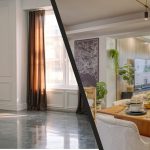
Ask ten Nairobi hosts what the airbnb furnishing cost Nairobi actually is, and you’ll get ten non-answers. “It depends.” “Around a million, maybe?” “My designer handled it.” Nobody wants to commit to a real number.
Meanwhile interior designers will happily quote you KES 1.6 million for a one-bedroom and struggle to explain what half the money bought. And YouTube keeps serving you videos of someone furnishing a flat in Dubai or Lagos, as if that tells you anything about sourcing a couch in Nairobi.
We’ve furnished serviced apartments across Westlands, Kileleshwa, and Lavington for four years. We track every shilling because we have to. So here’s the real airbnb furnishing cost Nairobi breakdown — actual line items from an actual 2-bedroom we set up recently. No ranges. No “it depends.” The receipts.
And if you’re wondering how much does it cost to start an airbnb in Kenya overall, furnishing is the biggest chunk by far — so getting this right is most of the battle.
This is a deep dive on furnishing costs. For the full guide on starting and running a profitable Airbnb in Kenya, read our complete guide →
Airbnb Furnishing Cost Nairobi: A 2-Bedroom Breakdown
This is from a recent Nairobi setup. Not estimates. Not ranges. Real numbers.
| Category | What’s Included | Cost (KES) |
|---|---|---|
| Major Electronics | 75″ Smart TV, fridge, washer/dryer combo, soundbar | 336,000 |
| Small Appliances | Espresso maker, blender, iron, diffuser, fans | 61,000 |
| Furniture | Couch, 2 beds + mattresses, dining table, desk + chair, TV stand, nightstands, coffee table, liquor cabinet, patio set | 602,000 |
| Curtains & Hardware | Blackout + sheer, every room | 76,000 |
| Carpets, Rugs & Mats | Entry runner, living room rug, dining, bedrooms, kitchen mat, hall runner, turf grass, bath mats | 111,000 |
| Decor & Art | Floor plants, 8 hanging plants, bold art throughout, wallpaper every bedroom, accent paint, 18 accent pillows, throws | 206,000 |
| Kitchen | Full cookware, cutlery, knives, plates, glasses, utensils, storage containers, gas tank, spice rack | 65,000 |
| Linens | Towels, robes, duvets, sheets, pillows, protectors, face towels | 70,000 |
| Lighting & Other | Bedside lamps, soap dispensers, laundry baskets | 20,000 |
| Total | ~KES 1,550,000 |
That’s a fully loaded 2-bedroom. Not cutting corners, not going designer-insane either. Every item on that list earns its place — either it shows up in photos, gets mentioned in reviews, or prevents a problem we’ve already learned the hard way.
For a 1-bedroom, we typically land between KES 800K–1.3M depending on what the apartment already comes with and how ambitious the design direction is. These airbnb startup costs in Kenya catch most new hosts off guard — but they pay for themselves fast (more on that below).

Where Your Furnishing Budget Actually Matters
Not every line item is created equal. Here’s where your money actually moves the needle when furnishing an Airbnb in Nairobi:
The 75″ TV — Yes, Really
The living room TV is the first thing guests see in your listing photos. It anchors the entire space. A 43″ TV looks like a computer monitor in a wide-angle shot. A 75″ TV makes the room look like a suite at a hotel you can’t afford.
KES 105,000 for a Hisense 75″ Smart TV. It shows up in literally every review. “The TV was amazing.” Guests log into their Netflix, sink into the couch, and start feeling rich. That feeling is what you’re selling. This is not vanity — it’s your highest-ROI single item.
The Mattress — Your Rating Lives Here
A guest who sleeps badly leaves a bad review. Full stop. No amount of accent pillows and hanging plants will save you from “the bed was uncomfortable.” You can have a Pinterest-worthy bedroom and still eat a 3-star because the mattress “felt like a yoga mat with ambition”.
Budget KES 30K–60K per mattress. We go mid-to-high. Waterproof mattress protectors on every bed (KES 2,400 each) — because one day a guest will spill wine, and you’d rather replace the protector than the KES 50K mattress underneath it.
KES 206K in Decorations — This Is the Moat
This is what separates a 3 or 4 star listing from a 5 star. Most Nairobi Airbnbs look like someone moved out of a nice apartment and left the furniture behind. Clean, functional, forgettable.
Our units have personality. Here’s what KES 206K buys you:
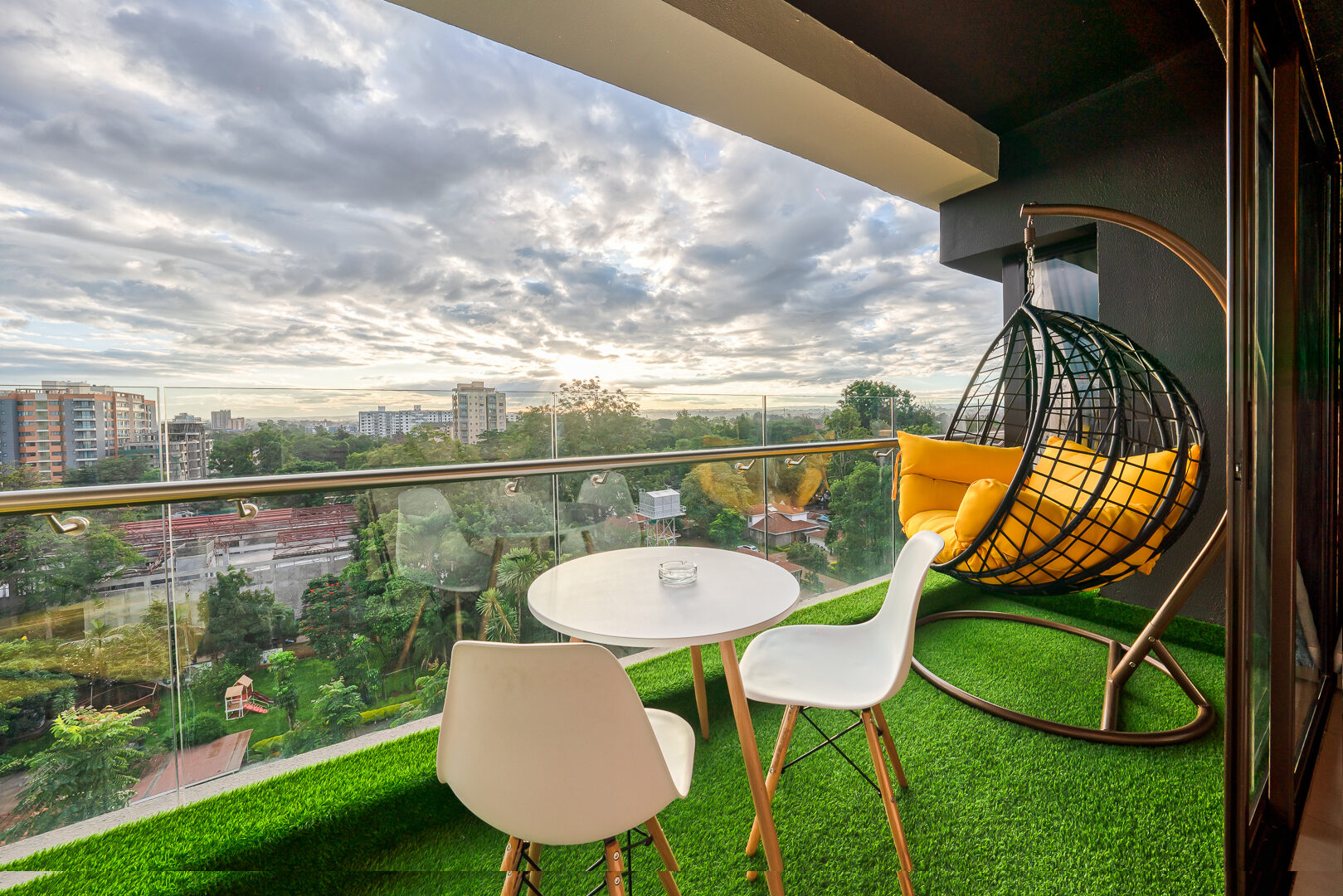
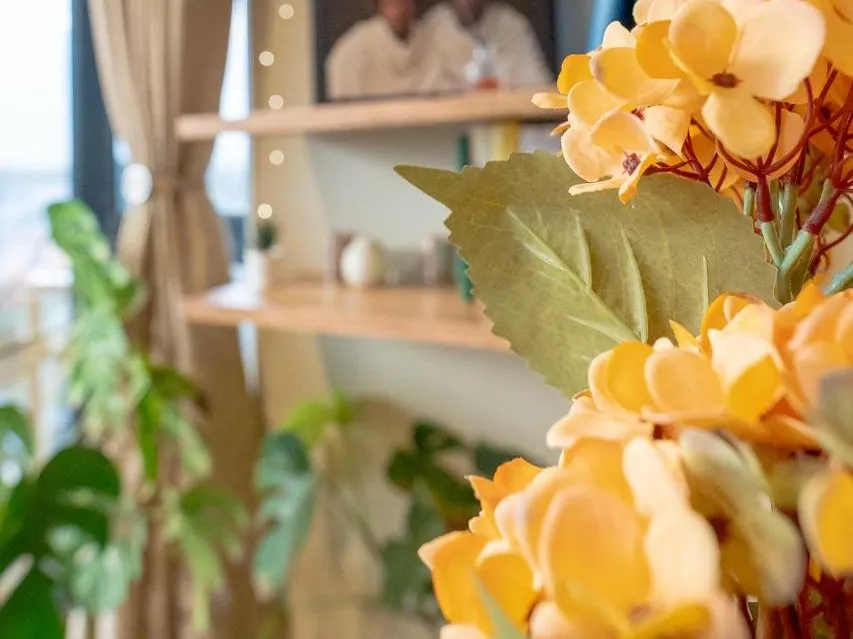
Plants everywhere. 8 hanging plants clustered in corners. Floor plants anchoring empty spaces. Total cost around KES 57,000. The return on photos alone is enormous — green, alive spaces book at completely different rates than bare walls and sad empty corners that whisper “someone used to live here.”
Bold art and wallpaper in every room. Not the generic canvas prints from the mall — the ones with the single dandelion and the quote about living, laughing, loving. Statement pieces from Nairobi artists. Accent wallpaper in every bedroom (KES 20K–40K per room). A full art portfolio throughout the house (KES 40K–80K). One of our units has a feature wall that gets mentioned in about a third of its reviews.
18 accent pillows and throws. KES 38,000 total. They add color, texture, and that “styled” look in every photo. Throws on the couch and foot of the bed complete the picture. Yes, eighteen feels like a lot. Count them in any hotel suite you like — they win.
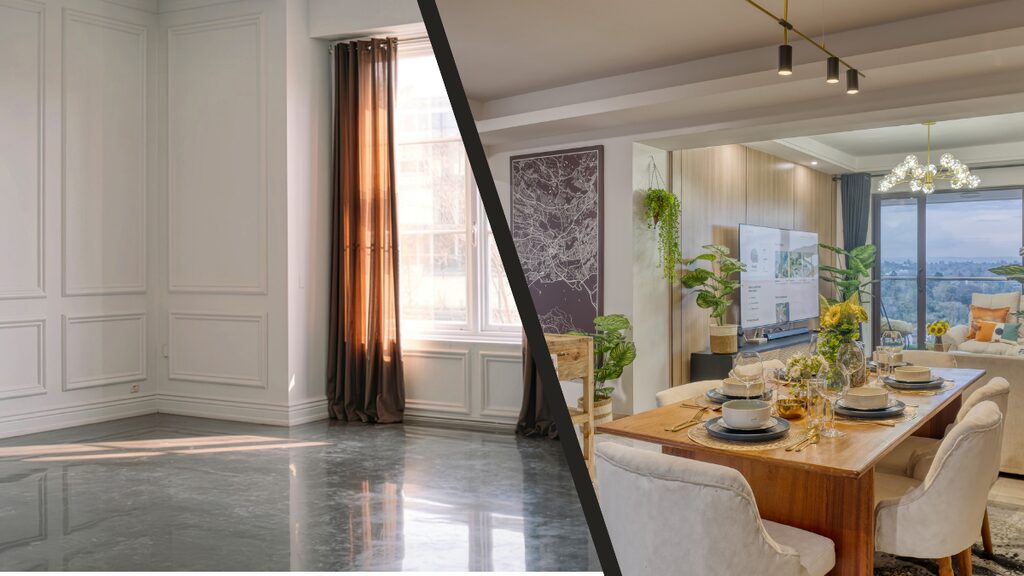
Fresh paint. Most landlords hand you beige walls — the default color of rental apartments everywhere on earth. KES 12,000 for a considered color scheme transforms the entire space. This is the cheapest, highest-impact change you can make.
Guests don’t book “nice apartments.” They book places that make them feel something. The KES 206K in decor is what creates that feeling. If your listing isn’t getting bookings, this section is probably why.
Buy Local: The Single Biggest Way to Cut Your Airbnb Furnishing Cost in Nairobi
Here’s the advice you won’t get from a designer whose markup depends on imported pieces: have your couches, bed frames, coffee tables, TV stands, and dining tables built right here in Kenya.
Two reasons. The first is obvious: it’s cheaper. A locally-made L-shaped couch, proper fabric, actual hardwood frame, built to your exact measurements, will run you KES 60K–110K. The imported equivalent at a Nairobi showroom? KES 180K–300K for something that’s been marked up three times before it reached you, and that you couldn’t return if it arrived in the wrong color anyway.
The second reason is the one people miss: locally-made furniture is usually built better. This sounds counterintuitive until you think about it. Imported furniture is engineered to survive a shipping container, a customs yard, and a truck ride to your apartment. That means lightweight. That means flat-pack. That means particle board, MDF, staples, and those little cam-lock fittings that work beautifully for about 18 months of normal home use.
Airbnb is not normal home use. Your couch is sat on by six different groups a month. Your bed frame survives guests who genuinely believe the weight limit is a suggestion. Your dining chairs get dragged, leaned back on, and occasionally stood on by someone trying to change a lightbulb at 2am. Flat-pack furniture does not survive this. It squeaks, wobbles, and eventually becomes the subject of a review you’ll wish you could take down.
Furniture made in Nairobi — by actual carpenters in Ngong Road, Kitengela, or Kiambu — is built from solid mahogany, mvule, or camphor. Screwed and glued, not stapled. It’s heavy. Heavy is good. Heavy means your couch isn’t moving three inches every time someone sits on it. Heavy means your bed frame is going to outlast the mattress on top of it, the lease of the apartment, and possibly the building itself.
What we recommend building locally:
- Couches and sectionals
- Bed frames (headboards are where local craftsmen really shine)
- Dining tables and chairs
- TV stands and media units
- Coffee tables and side tables
- Nightstands
- Liquor cabinets and shelving
- Desks
What we still import or buy from retail: mattresses, electronics, small appliances, lighting, and linens. These are the categories where local options either don’t exist or aren’t competitive on quality.
The catch — and there’s always a catch — is that you need to know a good carpenter, give them clear references (photos, dimensions, fabric samples), and check in on the build. Show up with a vague “I want a nice couch” and you’ll get a vague nice couch. Show up with a Pinterest board, exact measurements, and a fabric sample, and you’ll get something built better than anything you could have imported for twice the price.
This single decision — building vs importing — is often the difference between a KES 1.55M 2-bedroom and a KES 2.2M one that doesn’t actually look much better.
Hidden Airbnb Startup Costs Kenya Hosts Miss
The furniture is the obvious expense. Here’s what catches people off guard the first month:
Power converters and multi-plug adapters — international guests arrive with UK, US, and EU plugs and no patience for an adventure. One by every bedside and desk.
Surge protectors — Nairobi power fluctuations will fry your TV, soundbar, and espresso machine in a single bad Tuesday. One on every expensive appliance. Learn from our mistakes; we learned from ours at KES 95,000 a pop.
Handheld bidets — install on every toilet. Dealbreaker for many Middle Eastern and Muslim travelers, and increasingly expected by everyone else too.
Prayer mats — keep one in the closet with a qibla compass card. Tiny purchase, massive impact for Muslim guests.
Smoke and carbon monoxide detectors — every bedroom and kitchen. Airbnb flags listings without them.
The kitchen accessories nobody lists — knife sharpener, can opener, wine opener, Tupperware, strainers, mortar and pestle, cheese grater, measuring cups, tongs, baking tray. A guest who can’t strain pasta leaves a “kitchen was poorly equipped” review, and they’re not wrong.
Extra towels for the pool — if your building has a pool or gym, guests will absolutely take your bath towels down there unless you give them another option. And those towels are not coming back the same color.
Phone charging cables — Lightning, USB-C, Micro USB. Guests forget chargers with impressive consistency.
Umbrella by the door — Nairobi rain doesn’t warn you. Guests remember the host who thought of this.
Budget an extra KES 80K–150K on top of your core airbnb furnishing cost for these items plus professional photography (KES 15K–35K), a smart lock (KES 8K–25K), cleaning supplies, and a house manual. These hidden costs are part of why understanding the full airbnb startup costs in Kenya matters before you sign a lease.
The Competitor Quote vs Reality
We keep seeing the same story. A host gets a quote from a Nairobi interior design firm: KES 1.6M+ for furniture alone in a 1-bedroom. Imported pieces, heavy markups, a mood board so beautiful you almost don’t notice it has no kitchen in it.
What’s not included: kitchen essentials, linens, cleaning supplies, photography, listing setup, pricing strategy, or any understanding of what actually drives bookings on Airbnb. They’re designing a home. You need a hospitality business. Those are very different things and the mood board won’t tell you that.
Our model is different. We buy furniture at cost — literally what the manufacturer or supplier charges. No markup. Locally-built where it makes sense, imported where it has to be. Everything you need to run the Airbnb is included in the furnishing quote: cookware, linens, professional photography, hard copy house manuals, cleaning supplies — all of it, line by line.
On top of that is our flat setup fee: KES 250K for a 1-bedroom, KES 350K for a 2-bedroom. That fee covers our time and expertise — site assessment, interior design, procurement coordination, delivery management, listing creation and optimization, cleaner recruitment and training, SOPs, cleaning checklists, guest message templates, and launch strategy. You’re not paying for stuff. You’re paying for the system that makes the stuff work.
Total airbnb furnishing cost Nairobi for a 1-bedroom through us: KES 1.05M–1.55M — furniture and everything physical at cost, plus our setup fee.
Total through a typical design firm: KES 1.6M+ — and you still need to figure out photography, the listing, pricing, and operations yourself. Worse, many designers don’t supply what you actually need to run an Airbnb. No extra towels or bed sheets for quick turnarounds. Some don’t even quote for kitchen pots and cookware. You’ll often need another KES 100–200K just to get operationally ready after they’ve shaken your hand and walked out with the design fee.
How Fast You Make It Back
This is where the airbnb furnishing cost in Nairobi stops feeling like a cost and starts looking like an investment. Here’s the math on a 1-bedroom in a good Nairobi neighborhood:
Investment: KES 1.25M (mid-range furniture + setup)
Monthly returns:
- Average nightly rate: KES 11,200
- Occupancy: 75% (conservative — our portfolio runs higher)
- Gross monthly: KES 252,000
- After Airbnb fees (~18%): ~KES 210,000
Payback: roughly 6 months.
For a 2-bedroom at KES 1.55M investment and ~KES 283K/month net — similar payback timeline.
After that, it’s margin. Compare that to a long-term rental of the same unit at KES 100K–150K/month. The Airbnb route earns 2x more per month, and the furnishing investment pays for itself in under a year.
The hosts who get burned are the ones who cheap out on setup to “save money” and then wonder why their listing sits at 40% occupancy with a 4.3 rating. The furniture investment isn’t a cost — it’s the foundation that determines whether your listing earns KES 100K or KES 280K per month. Same apartment. Different setup. Very different business.
What Quality Level Affects Your Airbnb Furnishing Cost in Nairobi?
Depends on your neighborhood and who you’re trying to attract:
Mid Tier (KES 800K–1.2M furniture) — Sweet spot for most Nairobi Airbnbs. Kilimani, Kileleshwa, most of Westlands. Durable enough for high turnover, attractive enough for great photos. Nightly rates KES 6,000–10,000.
Premium Tier (KES 1.2M–1.8M furniture) — Riverside, Upper Westlands, Lavington. Higher revenue but guest expectations climb just as fast. Nightly rates KES 10,000–18,000.
We generally recommend mid tier. It gives you the best balance of durability, aesthetics, and return on investment. You can always upgrade specific items later once revenue is flowing — it’s much harder to downgrade expectations once you’ve set them. Not sure which neighborhoods work best? Read our guide to the best areas for Airbnb in Nairobi.
Want to Learn the Full System?
Understanding furnishing costs is just one piece. If you want to learn how to find, set up, launch, and scale a profitable Airbnb business in Nairobi — from unit hunting to pricing to operations — check out ESA University →. It’s our step-by-step course built from years of running short-term rentals in this market.
Next Steps
Every property is different. The airbnb furnishing cost Nairobi numbers here are portfolio averages — your specific unit might need more or less depending on layout, what the developer provides, and your target guest.
If you have a property and want a real cost estimate:
See our Furnishing Package → — site visit starts at KES 10,000 (credited if you proceed).
If you already have a furnished Airbnb that’s not performing:
Get a Free Listing Audit → — we’ll tell you what’s holding it back. No cost, no pitch.
If you’re still deciding whether Airbnb makes sense for your property:
Message us on WhatsApp → — we’ll give you an honest answer. Not every property should be an Airbnb.
This post is part of our Complete Guide to Starting a Profitable Airbnb in Kenya →. Read the full guide for location strategy, pricing, operations, and more.