If you want to know how to start Airbnb in Kenya and actually make money from it, you’re in the right place. It isn’t complicated, but it is specific. What works in Cape Town or Bali doesn’t automatically work here. The guests are different, the supply is different, the infrastructure is different — and the operators who ignore that end up wondering why their listing collects dust while the unit down the hall stays booked solid.
We’ve been operating short-term rentals across Nairobi for over four years. Westlands, Kilimani, Kileleshwa, Lavington — studios to three-bedrooms. Some of what we learned was obvious. Most of it wasn’t. This guide is everything we wish someone had told us on day one.
Whether you’re a property owner thinking about switching from long-term tenants, a diaspora investor looking at Nairobi from abroad, or someone who just signed a lease and is staring at an empty apartment — this is for you.
How to Start Airbnb in Kenya: Understanding the 2026 Market
Kenya welcomed 2.4 million international visitors in 2024, a 14.6% jump from the year before. Tourism earnings hit KES 452 billion. The new ETA system has replaced the old visa process, which means more spontaneous travel and fewer barriers to entry for visitors from key markets.
That’s the macro picture. Here’s what it means at street level in Nairobi:
Demand is real and growing. Business travelers, NGO workers, conference attendees, safari tourists on their first or last night, digital nomads, medical tourists visiting Nairobi Hospital or Aga Khan — the guest mix is diverse, and it’s year-round. This isn’t a seasonal beach market.
Supply is growing faster. New apartments are going up across Westlands and Kilimani every quarter. More supply means more competition, which means the days of throwing a mattress in a room and printing money are over. The listings that win now are the ones that are genuinely better — better photos, better pricing, better guest experience.
The average Kenya Airbnb listing earns far below its potential. Public data puts the average Nairobi ADR around $44 and occupancy around 46%. Our portfolio runs at 85%+ occupancy with nightly rates averaging 2-3x the market. The gap isn’t luck — it’s setup and operations.
The opportunity isn’t “Airbnb in Kenya is easy money.” The opportunity is that most operators are doing it poorly, and the bar to stand out is lower than you’d think.
Knowing how to start Airbnb in Kenya goes beyond understanding the market — it starts with where you put your property.
Choosing the Right Location (It’s Not Just About the Neighborhood)
The neighborhoods that consistently perform for short-term rentals in Nairobi are Westlands, Kilimani, Kileleshwa, and Lavington. That’s not a secret — anyone with access to AirDNA or a weekend of browsing Airbnb can figure that out.
What’s less obvious is that location within a neighborhood matters more than the neighborhood itself. Here’s what we mean:
Walkability to amenities. A unit within walking distance of a mall (Sarit Centre, Westgate, Yaya Centre, The Hub Karen) or restaurant cluster books significantly better than one that requires a taxi for everything. Guests — especially international ones — don’t want to rely on Uber for a cup of coffee.
Building quality and security. Guests read reviews, and “the guard was asleep” or “the elevator was broken” kills your bookings. A well-managed building with 24/7 security, reliable lifts, and backup power (or at least a generator) is worth the premium.
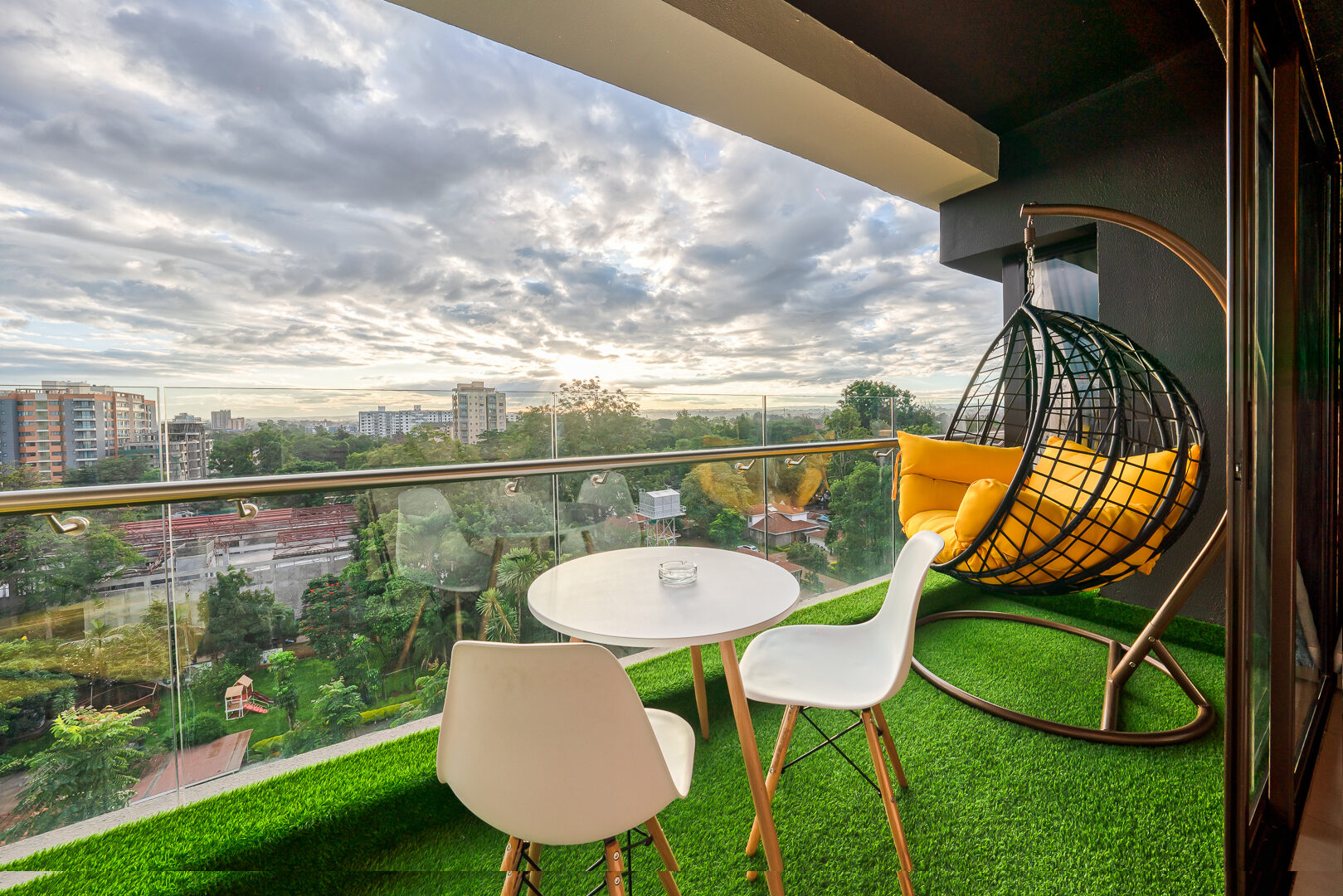
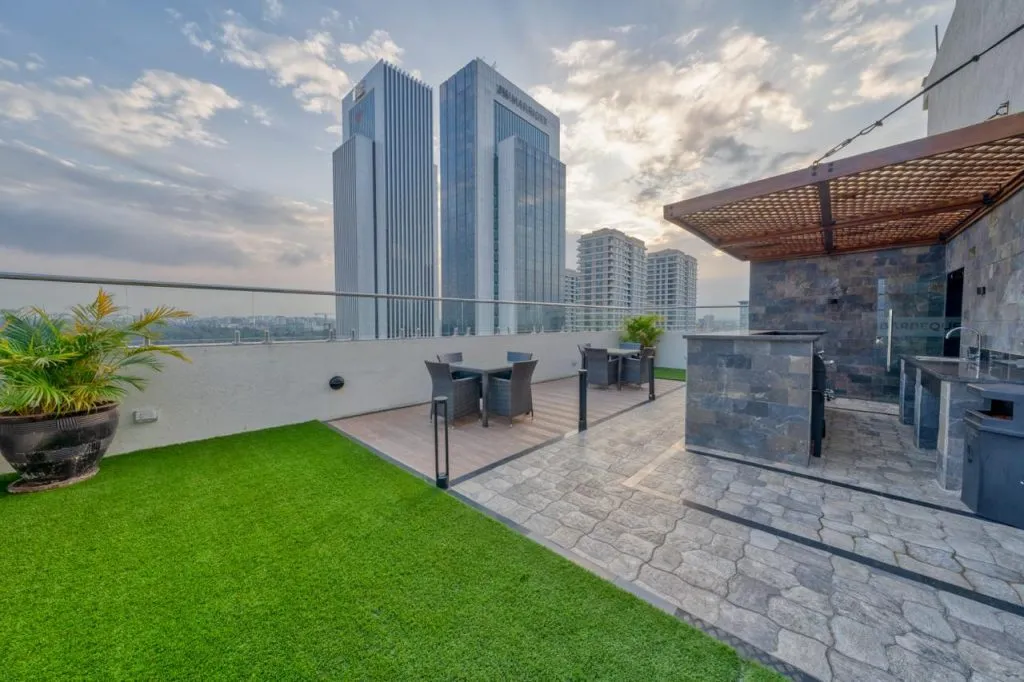
Floor and view. Higher floors photograph better, feel safer, and command higher rates. A balcony with any kind of view — city skyline, greenery, even a well-kept compound — adds KES 1,000-2,000 per night to your rate.
Avoid ground floors unless it’s a garden unit. Security perception drops and noise increases.
Parking. Not every guest drives, but enough of them do (especially domestic business travelers) that secure parking is a genuine booking factor.
One more thing: we avoid Kilimani for new setups. It’s oversaturated with Airbnb listings and the price wars are brutal. The returns are better in Westlands, Kileleshwa, and Lavington right now. That may change, but as of 2026, that’s the reality.
Not sure if your property or neighborhood is a good fit? We offer a free listing audit — submit your Airbnb link (or tell us about your property) and we’ll give you an honest assessment.
Furnishing: Where Most Hosts Get It Wrong
This is where the money is made or lost, and it happens before you ever list a single night.
Furnishing an Airbnb is not the same as furnishing your home. You’re not designing for your taste — you’re designing for photos, for durability, and for a guest who’s staying 3-7 nights and has specific expectations shaped by every hotel and Airbnb they’ve ever stayed in.
The Non-Negotiables
These are the things that, if you skip or cheap out on, will show up in your reviews:
A great mattress. This is your single most important purchase. A guest who sleeps badly leaves a bad review. Period. Budget KES 30K-60K per bed and buy the best you can. Protect it with a waterproof mattress protector (KES 2,400 each — you’ll replace the protector, not the mattress).
A smart TV with streaming. Netflix, YouTube, maybe Showmax. A 55-85″ Smart TV for the living room. Guests expect this like they expect running water.
Reliable WiFi. Invest in a quality WiFi Extender or mesh system for larger units, get at least 40Mbps, and test it from every room. Put the password in three places: the house manual, a card by the TV, and in your check-in instructions.
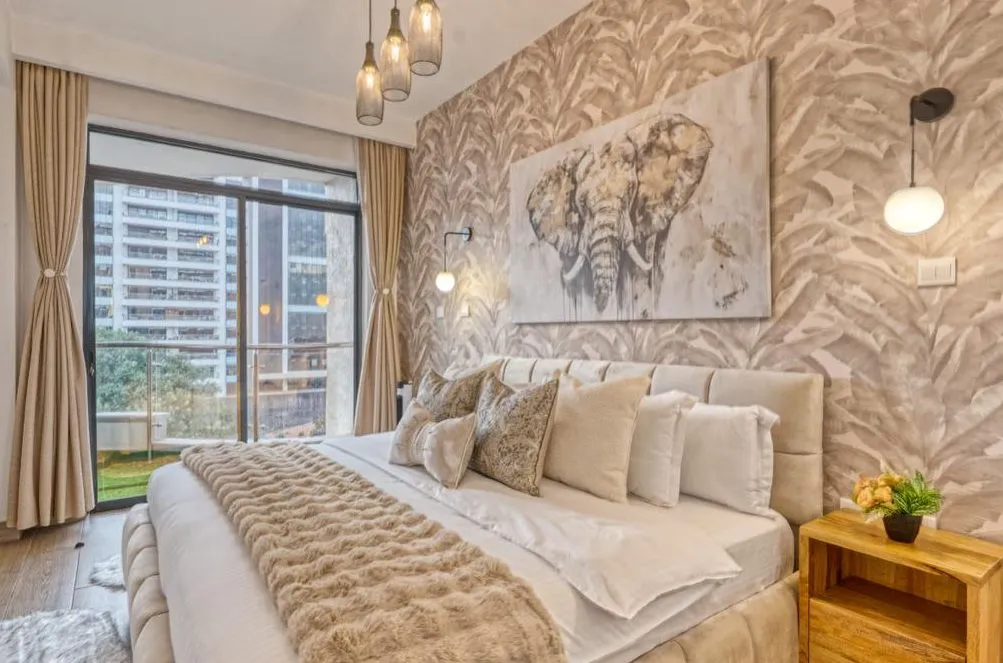
Blackout curtains. Every bedroom. Non-negotiable. People travel across time zones and need to sleep at odd hours. Sheer curtains layered underneath for daytime aesthetics.
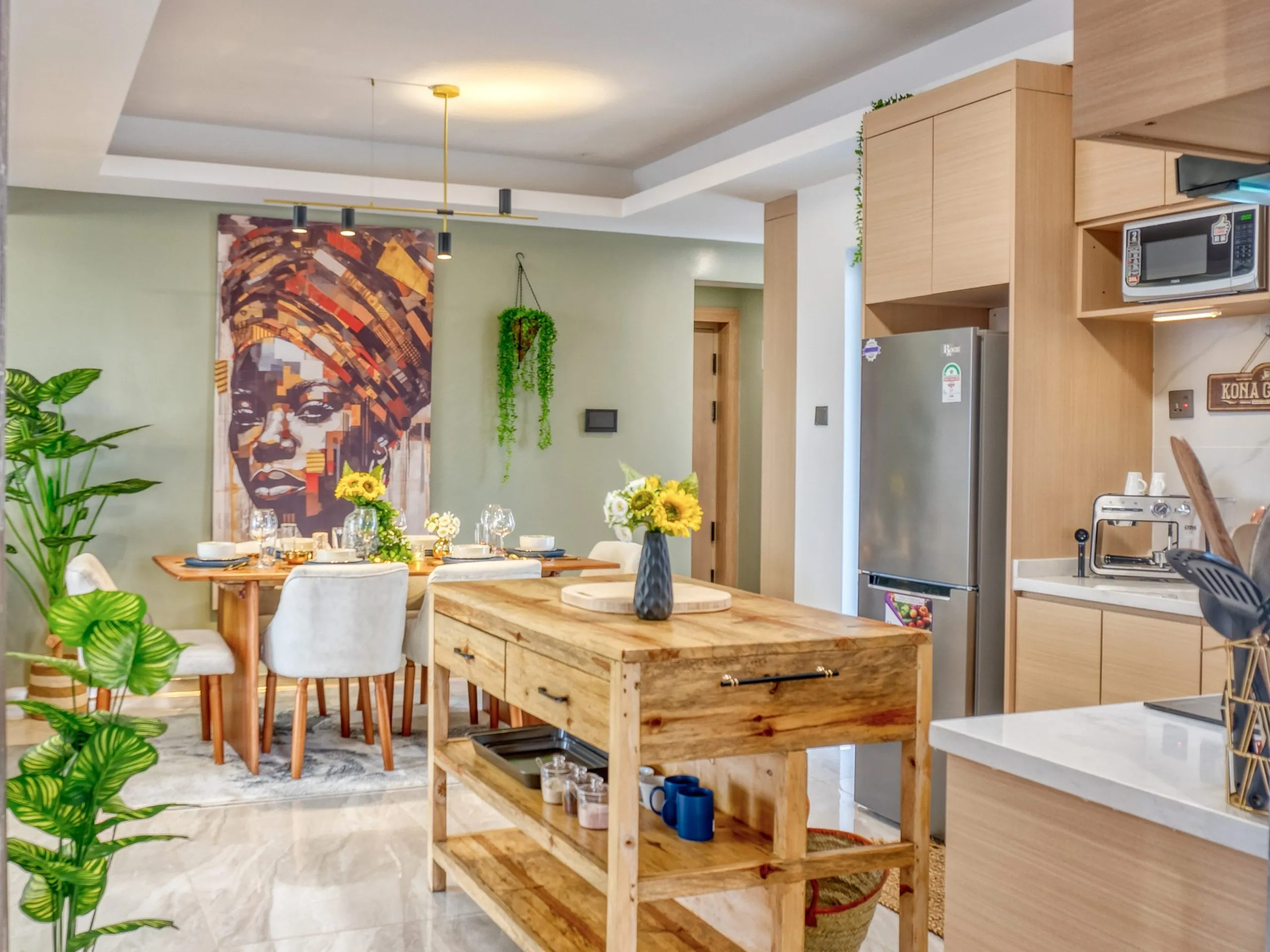
A proper kitchen. Not a kettle and two mugs. Full cookware set, sharp knives (with a sharpener), cutting boards, plates and bowls for 6, proper glasses (including wine glasses), a blender, toaster, espresso or coffee maker, spice rack with basics, baking ware, and a water dispenser. A guest who can cook a real meal stays longer and spends less on eating out — which means they have more budget for your nightly rate.
Washer and dryer. Especially for bookings beyond 3 nights. A washer/dryer combo runs about KES 90K. It pays for itself in the bookings you get from long-stay travelers who won’t even consider a listing without laundry.
Hair dryer and iron + ironing board. In every unit. Not optional. Business travelers and anyone attending events need these.
What Most Hosts Forget
After setting up dozens of properties, here’s the stuff that doesn’t make anyone’s first shopping list but you’ll scramble for within the first month:
- Power converters and multi-plug adapters — international guests arrive with UK, US, and EU plugs. Put one by every bedside and desk
- Surge protectors — Nairobi power fluctuations will fry your TV, soundbar, and espresso machine. One on every expensive appliance
- Extension cables — there are never enough outlets, especially by the bed
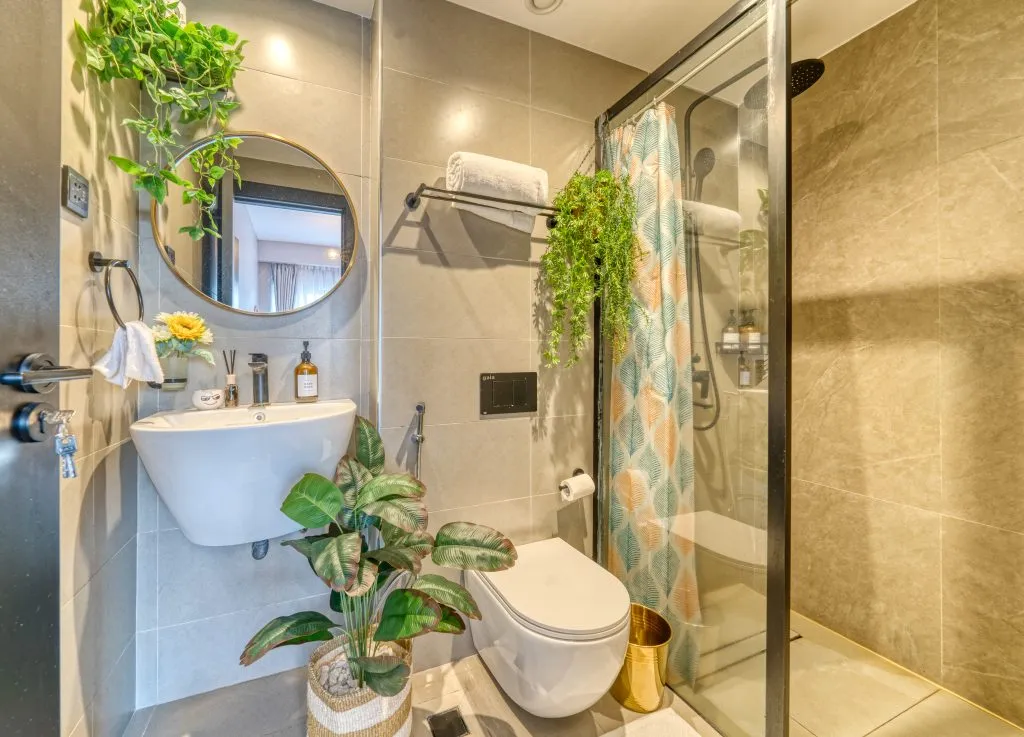
- Handheld bidets — install on every toilet. Dealbreaker for many Middle Eastern and Muslim travelers
- Prayer mats — keep one in the closet with a qibla compass card. Small purchase, huge impact
- Smoke and carbon monoxide detectors — every bedroom and kitchen. Airbnb flags listings without them
- Vacuum cleaner — your cleaner needs this, not a broom
- Soap dispensers — mounted in every bathroom and kitchen. Not tiny hotel bottles
- Laundry baskets — one per bedroom
- A dust bin in every room — including bedrooms
- Bath mats — we buy 12 per 2-bed unit and rotate them
- Face towels — separate from bath towels
- Robes — KES 1,800 each. Instant hotel feel
- Extra pool/gym towels — if your building has amenities, guests will take your bath towels down
- The kitchen stuff nobody remembers — knife sharpener, can opener, wine opener, Tupperware, strainers, mortar and pestle, cheese grater, measuring cups, tongs, baking tray
- Phone charging cables — Lightning, USB-C, Micro USB. Guests forget chargers constantly
- Torch — for the gap between a power cut and the generator kicking in
- Umbrella — Nairobi rain is sudden
- Sewing kit and stain remover pen
- Storage baskets — keeps closets and shelves tidy between turnovers
- Emergency turnover kit — extra sheets, towels, and cleaning supplies stashed in a locked closet
What Sets You Apart: The 5-Star Touches
Here’s the truth about Nairobi Airbnb: most listings are fine. Clean, functional, generic. They get 4.5 stars and 55% occupancy. The ones that get 4.9 stars and 85%+ occupancy do something different. They create a feeling.
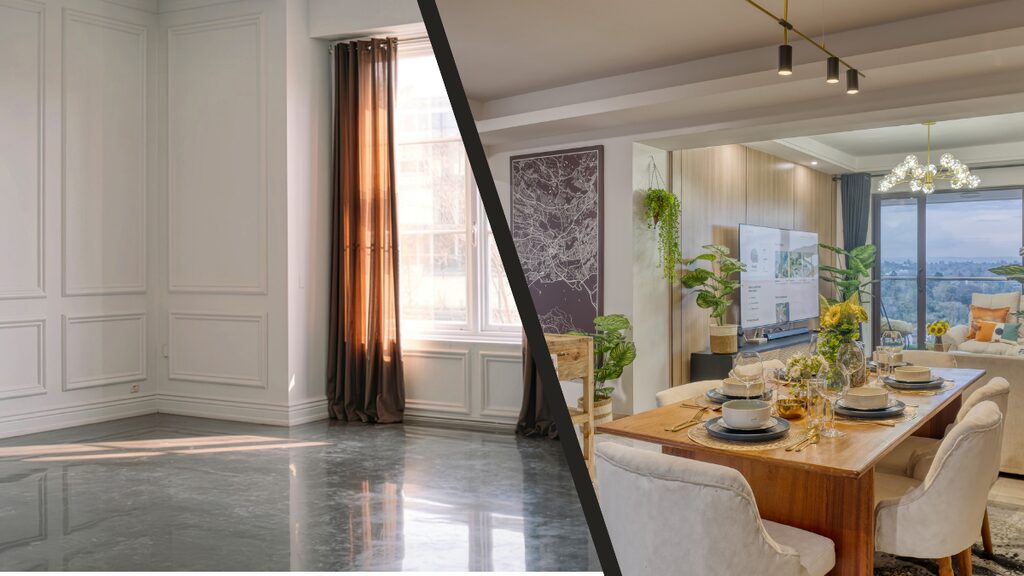
Plants. Floor plants in corners, hanging plants in clusters. One of our units has 8 hanging plants and a collection of floor plants — total cost around KES 57,000. The return on that investment in photos alone is enormous. Green, alive spaces photograph 10x better than bare walls.
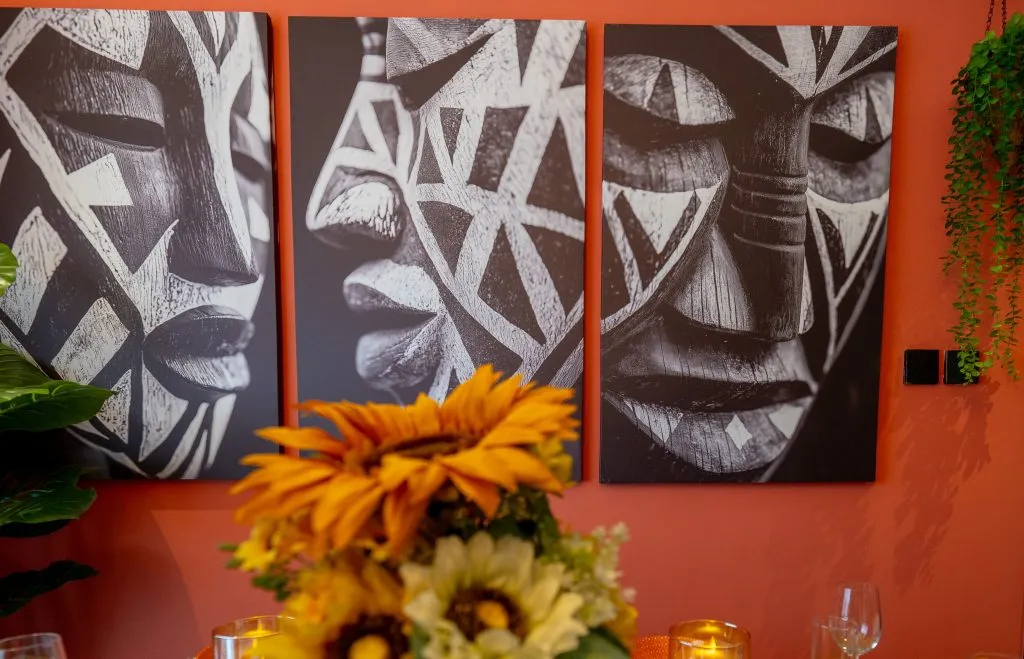
Bold art and wallpaper. Every bedroom gets wallpaper (KES 20K-40K per room), and every room gets a bold, curated art piece. Accent walls in living areas, textured wallpaper in bedrooms, a full art portfolio throughout the house. Budget KES 40K-80K for art across the unit. These are the pieces guests photograph and mention in reviews. It is one of the biggest visual differentiators between a listing that gets scrolled past and one that gets booked.
Paint. Most houses are handed over with beige or pure white walls. A fresh coat in a considered color scheme (KES 12,000) completely transforms the space. Dark accent walls, warm whites, muted greens — whatever fits the design direction. This is one of the cheapest, highest-impact changes you can make.
Sound system. A soundbar in the living room (KES 31,000) turns movie night from “watching TV in an apartment” to “having a cinematic experience.” Guests notice.
Diffusers and essential oils. Scent is the most underrated sense in hospitality. When a guest walks in and the apartment smells like eucalyptus or lavender — not air freshener, not nothing — it registers as premium. A good diffuser costs KES 3,500. Essential oils cost almost nothing per refill.
Accent lighting. Warm bedside lamps instead of (or in addition to) overhead lights. They photograph beautifully, they create ambiance, and they make every guest’s evening feel intentional.
Accent pillows and throws. 18 accent pillows across a 2-bedroom unit. KES 38,000 total. They add color, texture, and that “styled” look in every photo. Throws on the couch and foot of the bed complete the picture.
An espresso machine, not just a kettle. KES 15,500 for a machine that makes every business traveler’s morning. This gets mentioned in reviews constantly.
Unique touches. A liquor cabinet (even empty, it looks great). Board games. A turntable with vinyl records. A patio with artificial turf grass (KES 24,000) that looks like a rooftop garden. These are the things people photograph, mention in reviews, and remember when choosing their next Nairobi stay.
A house manual that’s actually useful. Not a laminated sheet with WiFi and checkout time. A proper guide with your favorite restaurants within walking distance (with what to order), the best coffee shops to work from, how to get to the airport, what to do on a free afternoon, emergency numbers, and tips only a local would know. This is your silent concierge. Guests don’t just read it — they appreciate it. We’ve found this single item moves review scores by 0.2-0.3 stars.
Furnishing a unit properly is a project. If you want it done right without spending months sourcing furniture yourself, take a look at our furnishing package — we handle everything from design to your first booking.
How Much Does It Cost to Start an Airbnb in Kenya?
Let’s use real numbers from a recent 2-bedroom setup in Nairobi. These are actual line items, not estimates:
| Category | Cost (KES) |
|---|---|
| Major electronics (75″ TV, fridge, washer/dryer, soundbar) | 336,000 |
| Appliances (espresso maker, blender, iron, vacuum, diffuser, etc.) | 61,000 |
| Furniture (couch, beds, dining table, desk, TV stand, nightstands, patio set) | 602,000 |
| Curtains + hardware | 76,000 |
| Carpets, rugs, mats | 111,000 |
| Decorations (plants, art, wallpaper, paint, pillows, throws) | 206,000 |
| Kitchen essentials (cookware, cutlery, plates, glasses, everything) | 65,000 |
| Linens (towels, robes, duvets, sheets, pillows, protectors) | 70,000 |
| Lighting + other | 20,000 |
| Total | ~KES 1,550,000 |
That’s a fully loaded 2-bedroom — not cutting corners, not going luxury-insane either. The 75″ TV is a deliberate choice (it’s the first thing guests see in photos). The KES 206K in decorations is what turns “nice apartment” into “I need to book this place.”
For a 1-bedroom, expect roughly KES 800K-1.3M depending on your design direction and what the apartment already comes with (some have built-in wardrobes, kitchen appliances, etc.). We break down every line item in our full furnishing cost guide.
For context, we’ve seen quotes from Nairobi interior design firms charging KES 1.6M+ for furniture alone in a 1-bedroom — imported pieces with heavy markups, and zero Airbnb-specific setup. No kitchen essentials, no linens, no operational items. Just furniture.
The Costs Beyond Furniture
Budget another KES 80K-150K on top for:
- Professional photography (KES 15K-35K — this is mandatory, not optional)
- Smart lock or lockbox for self check-in (KES 8K-25K)
- Initial cleaning supplies and guest amenities (KES 15K-25K)
- House manual design and printing (KES 5K-10K)
- WiFi router upgrade if needed (KES 5K-15K)
- First month’s WiFi and any setup deposits
Is Airbnb Profitable in Kenya? What You’ll Actually Earn
Let’s talk returns. These are based on our portfolio performance — not projections from a spreadsheet, but actual results across multiple units over multiple years.
1-Bedroom in a good Nairobi neighborhood:
- Average nightly rate: ~KES 11,200
- Occupancy: 75% (conservative — our portfolio averages higher)
- Gross monthly: ~KES 252,000
- After Airbnb platform fees (~18%): ~KES 210,000/month
2-Bedroom:
- Average nightly rate: ~KES 15,100
- Occupancy: 75%
- Gross monthly: ~KES 340,000
- After Airbnb fees: ~KES 283,000/month
These figures don’t include:
- Rent (if you’re doing arbitrage, not on owned property)
- Turnaround cleaning costs
- Utilities (water, electricity — typically KES 5K-12K/month)
- Property management (15-20% of gross if you hire a manager)
- Maintenance and replacements
- Taxes
Even after all operating costs, a well-run 2-bedroom Airbnb in Nairobi nets significantly more than a long-term rental of the same unit, which typically goes for KES 100K-150K/month. We did the full side-by-side comparison with real numbers if you want the detailed breakdown. The Cytonn NMA Report puts average residential rental yield at 5.4%. Our portfolio operates at 8-12%.
Payback on furnishing: At mid-range furniture costs and typical returns, most units pay back the full furnishing investment in 6-7 months. After that, it’s margin.
Want to see what your specific property could earn? Our free listing audit includes a revenue estimate based on your location, unit size, and local competition.
Pricing: The Skill Most Kenya Airbnb Hosts Never Learn
Pricing an Airbnb isn’t “pick a number and hope.” It’s the single biggest lever you have for revenue, and most hosts in Kenya leave 30-40% on the table because they set one price and forget it.
Seasonality matters. Kenya’s STR market has clear patterns, though Nairobi is less seasonal than the coast:
- Peak: July-October (migration season tourism), November-December (holiday travel)
- Shoulder: January-March (conference season, post-holiday business travel)
- Low: April-June (long rains — but business travel still holds)
Your pricing should swing 20-40% between peak and low season. If you’re charging the same rate in August that you charge in May, you’re either losing bookings in May or losing money in August.
Weekday vs weekend. Depends on your location and guest mix. Westlands units with strong business traveler demand may actually perform better on weekdays. Units near entertainment areas might spike on weekends. Track your own data and adjust.
Don’t race to the bottom. The Kenya average ADR is around $44. Our listings average KES 11,000-15,000 per night. The difference? Better setup, better photos, better positioning. Cheap pricing attracts cheap guests who leave cheap reviews. Price for the guest you want.
Minimum night stays. Use them strategically. 2-3 night minimums in peak season (you don’t want single-night turnovers when you could fill a 5-night booking). Drop to 1 night in low season to capture any demand you can.
We track over 1000 Kenya listings daily with our own market data tools. The hosts who adjust pricing weekly or bi-weekly consistently outperform those who “set and forget” — by a margin that compounds significantly over a year. We wrote an entire post on the 7 pricing mistakes Nairobi hosts make — it’s worth reading before you set your first rate.
Operations: The Boring Stuff That Makes or Breaks You
The sexy part of Airbnb is the design, the listing, the first booking. The profitable part is operations — the unsexy, repetitive systems that keep your rating above 4.8 and your calendar full.
Cleaning
This is your most important operational relationship. A bad cleaner will cost you more in bad reviews than any furniture decision you make.
Find someone reliable, train them to hotel standards, and pay them well. Underpaying cleaners is the fastest way to inconsistent quality. We provide our cleaners with detailed checklists — not “clean the apartment” but “fold the toilet paper, fan the towels, check under the beds, restock the soap dispensers, photograph the unit before leaving.” Every. Single. Time.
Budget KES 1,000-2,500 per turnover depending on unit size and Nairobi rates. Same-day turnovers (guest checks out at 10am, new guest arrives at 3pm) need a tight system — this is where your emergency supplies kit saves you.
Guest Communication
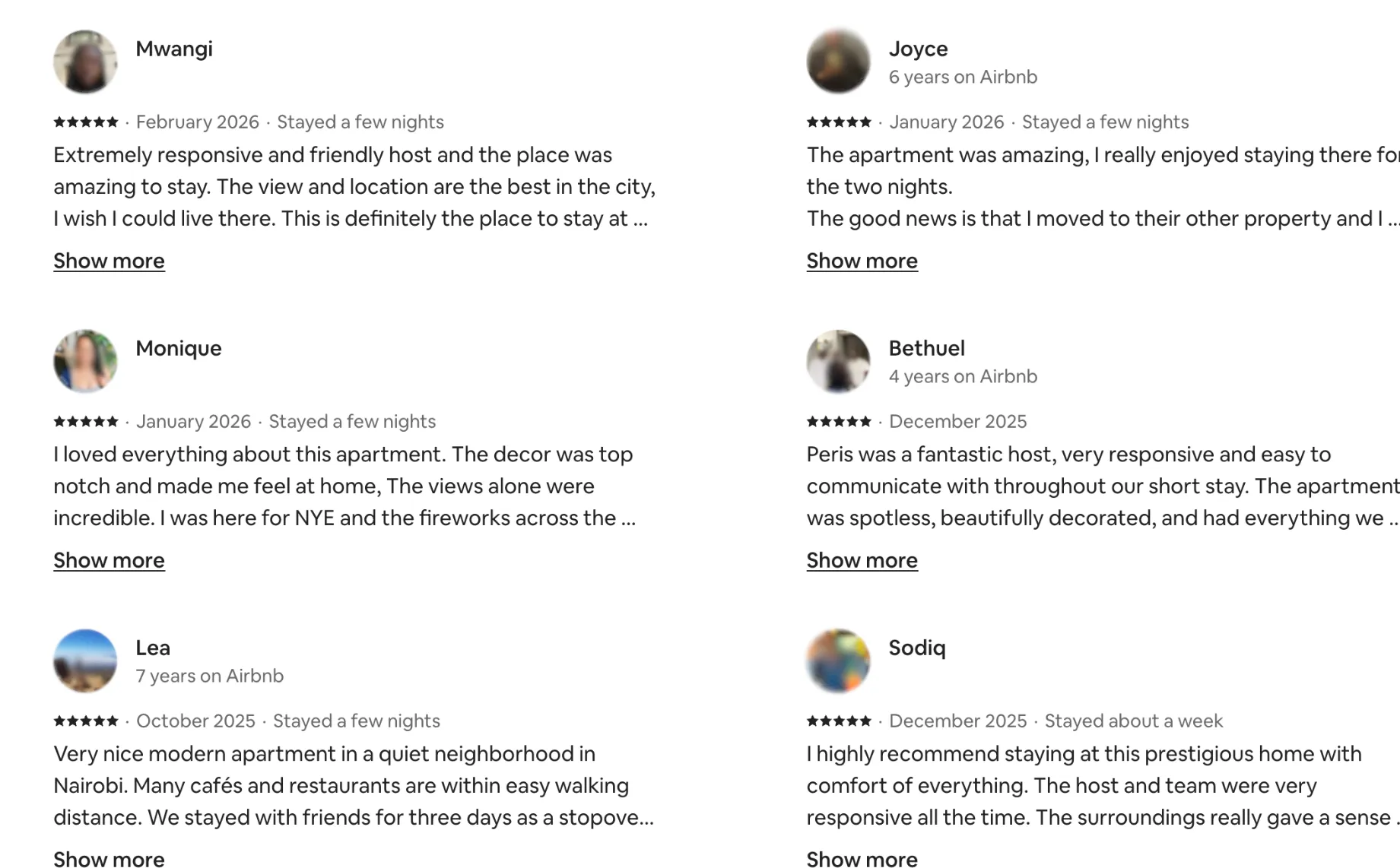
Respond fast. Within an hour for booking inquiries, within minutes for current guests. Use saved messages for common questions (directions, WiFi issues, restaurant recommendations) but personalize them. Guests can tell when they’re talking to a template.
The check-in experience sets the tone. Self check-in with a smart lock or lockbox is standard now. Send clear instructions with photos 24 hours before arrival. Follow up an hour after check-in: “Did you find everything okay? WiFi working?” This one message prevents 80% of mid-stay issues.
Maintenance
Things break. Plan for it. Budget KES 10,000-20,000/month for minor repairs and replacements — a broken handle, a stained duvet cover, a leaky tap. Having a reliable handyman on call (not one you’re finding on Google during an emergency) is essential.
Replace anything worn before a guest notices. Stained pillows, fraying towels, chipped mugs — if you can see the wear, so can your guest, and it’ll show up in reviews as “the place was okay but felt a bit tired.”
Reviews
Your first 10 reviews define your listing’s trajectory on Airbnb. The algorithm rewards new listings with a visibility boost — but only if you convert that visibility into bookings AND good reviews.
Price aggressively for your first 5-10 bookings. Slightly below market. You’re buying reviews, essentially, and those reviews will pay for themselves in higher rates for the next 12 months.
After that, never stop asking. A friendly message on checkout day — “Hope you enjoyed your stay! A review would mean a lot to us” — works. Don’t be desperate about it. Just be human. If your listing is live but bookings aren’t coming, read why your Nairobi Airbnb isn’t getting bookings — the fix is usually simpler than you think.
Legal and Tax: The Part Nobody Wants to Read
We’ll keep this brief because it matters but it’s not why you’re here.
KTRA Registration. The Kenya Tourism Regulatory Authority technically requires registration for short-term rental operations. The enforcement is inconsistent, but it’s the law and it’s trending toward more enforcement, not less.
KRA and Taxes. Airbnb started deducting 5% Withholding Tax in Kenya in 2026. On top of that, you have options for how to report your income:
- MRRIT (Monthly Residential Rental Income Tax): 7.5% of gross rent. Simple, final tax, no deductions. Works if your annual rental income is between KES 288K and KES 15M.
- Regular income tax: Higher rates but you can deduct expenses (rent, utilities, furnishing depreciation, management fees). Makes sense if your expenses are high relative to income.
VAT: Required if your annual turnover exceeds KES 5 million. Most single-unit operators won’t hit this, but if you’re scaling to multiple properties, plan for it.
Get professional tax advice. Seriously. The Kenyan tax landscape for STR operators is evolving, and getting it right from the start is cheaper than fixing it later. We’re not tax advisors — we’re Airbnb operators who learned this the hard way.
Self-Manage or Hire a Manager?
This depends on two things: your time and your proximity.
Self-manage if:
- You’re in Nairobi and available (or have a reliable person who is)
- You have 1-3 units
- You enjoy the operational side
- You want to maximize margin
Hire a manager if:
- You’re outside Nairobi (especially diaspora investors)
- You have more units than you can personally oversee
- You’d rather focus on acquiring more properties than managing the ones you have
- You value your time at more than the management fee saves you
Management fees in Kenya typically run 15-20% of gross revenue. A good manager earns their fee by maintaining higher occupancy and rates than you’d achieve alone. A bad manager costs you twice — their fee plus the revenue they’re leaving on the table.
If you go the management route, look for operators with verifiable track records — real occupancy data, real reviews, real properties you can look up on Airbnb. Not just a website with stock photos. We wrote a full guide on how to vet a management company in Nairobi — including the scams to watch for.
We selectively manage properties that meet our standards, or we can connect you with a vetted manager in our network. Learn more about our management options →
Scaling: From One Unit to a Portfolio
Once your first unit is profitable and systematized, the question becomes: do you want more?
Arbitrage model (leasing): Lower upfront capital (security deposit + furnishing), faster to launch, but you’re paying rent whether you have bookings or not. Works well in Kenya’s current market if you pick the right buildings and negotiate favorable lease terms.
Owned property: Higher upfront cost, but no rent eating into your margin. Property values in Kenya have appreciated 425% since 2000 according to Hass Consult — so you’re building equity while earning rental income.
The key to scaling: Systems. If your first unit runs on you personally — you’re the one messaging guests, coordinating cleaners, handling emergencies — you’ll burn out at 3 units. Build SOPs, hire a cleaner you trust, set up automated messaging, and create checklists for everything before you add unit #2. That’s the real answer to how to start Airbnb in Kenya — start with one unit, systematize it, then scale.
The Honest Truth About Starting an Airbnb in Kenya
Learning how to start Airbnb in Kenya is the easy part — running it is where the real work begins. It’s not passive income. Not at first. It’s a business that requires real capital, real attention, and real effort to set up properly.
But it is one of the best returns on investment available in Kenyan real estate right now. A well-set-up unit in the right location, with the right pricing and operations, will pay back its furnishing cost in under a year and generate consistent income after that.
The hosts who fail are the ones who cut corners on setup, ignore their pricing, and treat it like a side project. The ones who succeed treat it like what it is: a hospitality business.
Where to Start
If you’ve read this far, you’re serious. Here’s what to do next:
If you already have a listing that’s underperforming:
Get a free listing audit → — Submit your Airbnb link and we’ll tell you exactly what’s holding it back. No cost, no obligation.
If you have a property and want it set up properly:
See our furnishing and launch package → — We handle everything from interior design to your first booking. Site visit starts at KES 10,000 (credited if you hire us).
If you’re still deciding whether Airbnb is right for your property:
Questions? Message us on WhatsApp → — We’ll give you an honest take. Not every property should be an Airbnb, and we’ll tell you that upfront.
Elite Stays Africa operates short-term rentals across Kenya’s top neighborhoods. 85%+ average occupancy, 4.92★ guest rating, 4+ years in the market. Learn more about our services →